
A modern consumer unit distributes electricity and houses protective devices for your circuits. Learn the roles of MCBs, RCDs, RCBOs and surge protection. Guidance on the parts of an installation that distribute and protect power, plus the practical realities of upgrading older wiring. Decisions should be based on condition, testing and the work you plan to add—not appearance alone.
Assessment comes before replacement
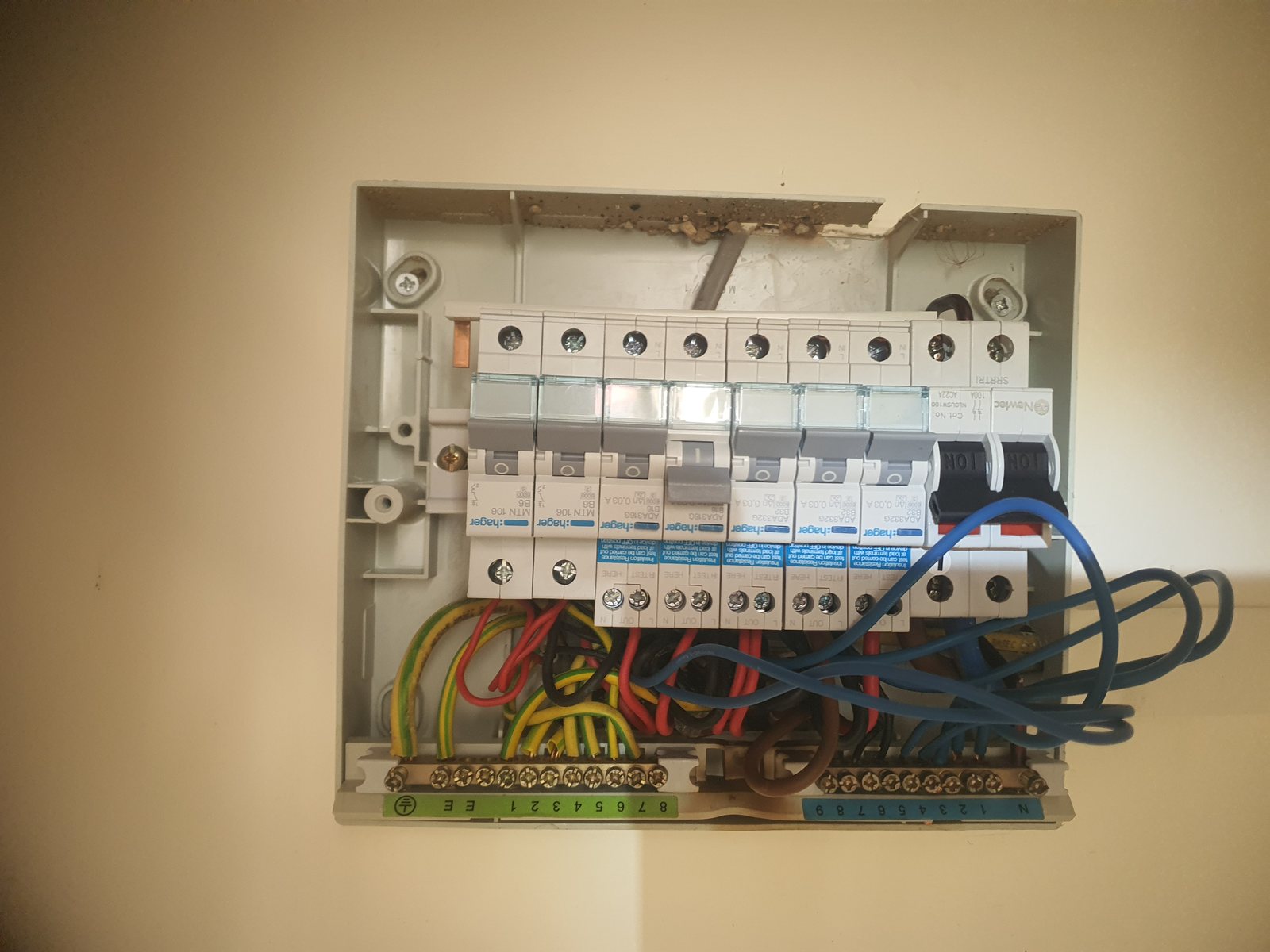
A photograph can show the type and apparent age of equipment, but it cannot establish the condition of hidden wiring or the effectiveness of protective measures. Testing and a site assessment are the sensible starting point before deciding how much work is actually needed.
Older equipment is not automatically unsafe, and newer equipment is not automatically fault-free. The decision should reflect test results, defects, circuit arrangement, planned additions and whether the installation can support current and future use.
Protection, circuits and future capacity
Modern installations make greater use of residual-current protection, individual circuit protection and surge protection. The best arrangement depends on the property and the circuits present. Leaving sensible spare capacity can also avoid another major alteration when an EV charger, kitchen circuit or extension is added later.
Labelling matters too. Clear circuit schedules and test results make isolation safer and future maintenance more efficient, especially in larger homes and commercial properties.
What the work can involve
Electrical upgrading can involve isolation, removal of old equipment, new cabling or containment, making connections, testing and certification. Rewiring adds access work: floorboards, loft spaces, chases, furniture and finished surfaces all influence the programme and disruption.
Good planning separates what must be done for safety from optional improvements such as additional sockets, data points, lighting changes or future circuits. This keeps the specification clear before work starts.
Certification and handover
Completed installation work should be inspected and tested and the appropriate electrical certificate supplied. Where work is notifiable under building regulations, the correct notification process should also be followed.
If you are planning this type of work in Milton Keynes, see our related service page for the scope we offer and arrange a survey before finalising the specification.
When should you arrange professional help?
If the work involves fixed wiring, repeated tripping, heat, damage, uncertain earthing, a new circuit or safety testing, arrange a competent electrician rather than experimenting. Electrical faults can disappear temporarily and still remain unsafe.
For properties in Milton Keynes, Emergency Electrician Milton Keynes provides inspection, fault finding, repairs and planned installation work. Call 03300 438744 for urgent electrical problems or contact us for planned work.
This guide is general information, not a substitute for an inspection of your installation. Requirements and guidance can change; where legal compliance matters, check the latest official guidance for your property type and circumstances.